
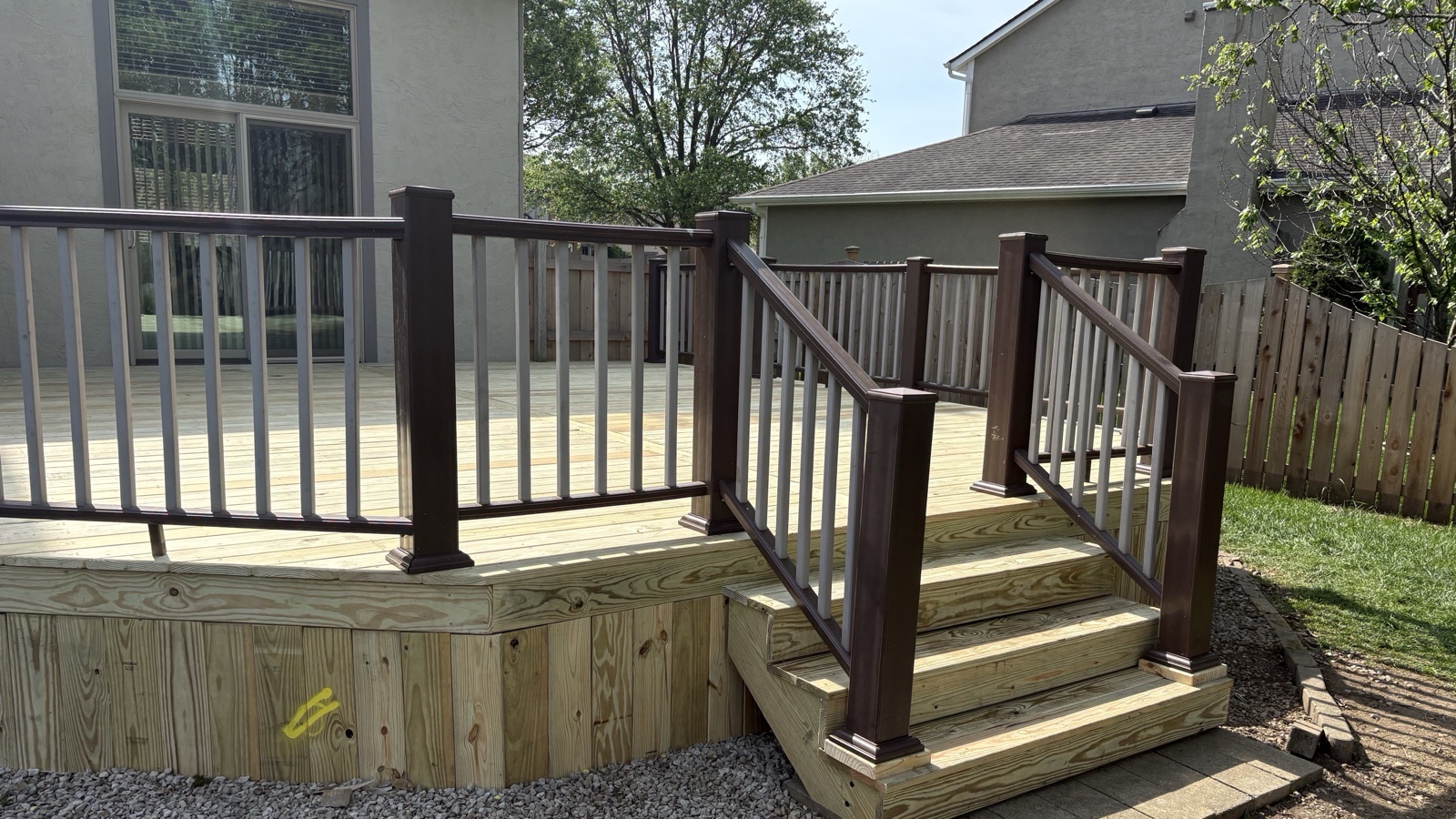
Composite vs. Wood Decking in Ohio: Which Is Right for Your Home?
"Should I go with composite or wood?" is the question we hear most from homeowners in West Jefferson, Dublin, and across central Ohio. Both can make a great deck. The right choice depends on your budget, how much upkeep you want, and how long you plan to stay in your home.
Here's how the two compare, from a crew that builds both every season.
How Ohio weather changes the answer
Ohio is hard on decks. Summer sun fades and dries out boards. Spring and fall rain soak them. And winter brings repeated freeze-thaw cycles (the State Climate Office of Ohio tracks these seasonal swings), where water gets into the wood, freezes, expands, and slowly opens up cracks and splits.
That's why the material question matters more here than in milder climates. Whatever you choose has to handle moisture, UV, and temperature swings year after year.
Pressure-treated wood decking
Pressure-treated (PT) lumber is wood that's been treated to resist rot and insects. The EPA explains the preservatives used in today's residential lumber. It's the most common deck material in Ohio, and for good reason.
Pros
Lowest upfront cost. PT wood is the most budget-friendly way to get a quality deck.
Classic, natural look. Real wood grain, and you can stain it any color.
Easy to repair. Damaged boards are simple and inexpensive to swap out.
Cons
Regular maintenance. Plan on cleaning and re-staining or sealing every 2 to 3 years to keep it protected.
Checking and splitting. Freeze-thaw cycles cause small cracks and splinters over time, especially on boards that aren't sealed.
Shorter lifespan. A well-kept PT deck lasts many years, but it won't match composite without ongoing care.
Composite decking
Composite boards are made from a blend of wood fibers and plastic, with a protective outer shell. We install top brands like Trex and TimberTech.
Pros
Very low maintenance. No staining or sealing. An occasional wash with soap and water keeps it looking good (see the Trex care and cleaning guide).
Built for Ohio winters. Composite doesn't absorb water the way wood does, so it resists rot, splitting, and splinters.
Long warranties. Many composite lines carry 25 to 30 year manufacturer warranties against fading and staining. Compare the Trex warranty and the TimberTech warranty.
Consistent look. Colors and wood-grain patterns stay uniform across the whole deck.
Cons
Higher upfront cost. Composite costs more than PT wood to buy and install.
Gets warmer in direct sun. Darker colors can get hot on summer afternoons. Lighter colors help.
Still needs a solid frame. The framing under a composite deck is usually still pressure-treated lumber, so it has to be built right.
Cost over time: the real comparison
Composite costs more on day one. Wood costs more as the years go by, because of staining, sealing, and board replacements.
If you're planning to stay in your home for 10 years or more, the gap closes. Many homeowners find composite comes out close to even once they add up a decade of maintenance on a wood deck, not to mention the weekends saved.
If you're on a tighter budget or may move in a few years, a well-built pressure-treated deck is a smart choice that still looks great.
A middle option: resurface with composite
Already have a wood deck with a solid frame? You may not need a full replacement. We can often keep the existing frame and replace just the deck boards and railings with composite. You get the low-maintenance surface at a lower cost than a full rebuild. We'll inspect the frame first to make sure it's sound.
Quick comparison
Pressure-treated wood | Composite | |
|---|---|---|
Upfront cost | Lower | Higher |
Maintenance | Stain/seal every 2–3 years | Occasional washing |
Handles freeze-thaw | Can crack and split over time | Resists moisture and splitting |
Typical warranty | Limited | Often 25–30 years (manufacturer) |
Best for | Tighter budgets, shorter stays | Long-term homeowners, low upkeep |
So which should you choose?
Choose pressure-treated wood if upfront budget is the priority and you don't mind regular staining.
Choose composite if you want a deck you can enjoy, not maintain, and you plan to stay put.
Consider a composite resurface if your current deck's frame is still in good shape.
Frequently asked questions
Get a free deck estimate
Ohio Deck Builders has built hundreds of decks across central Ohio, from new deck construction to composite upgrades and deck repair.